
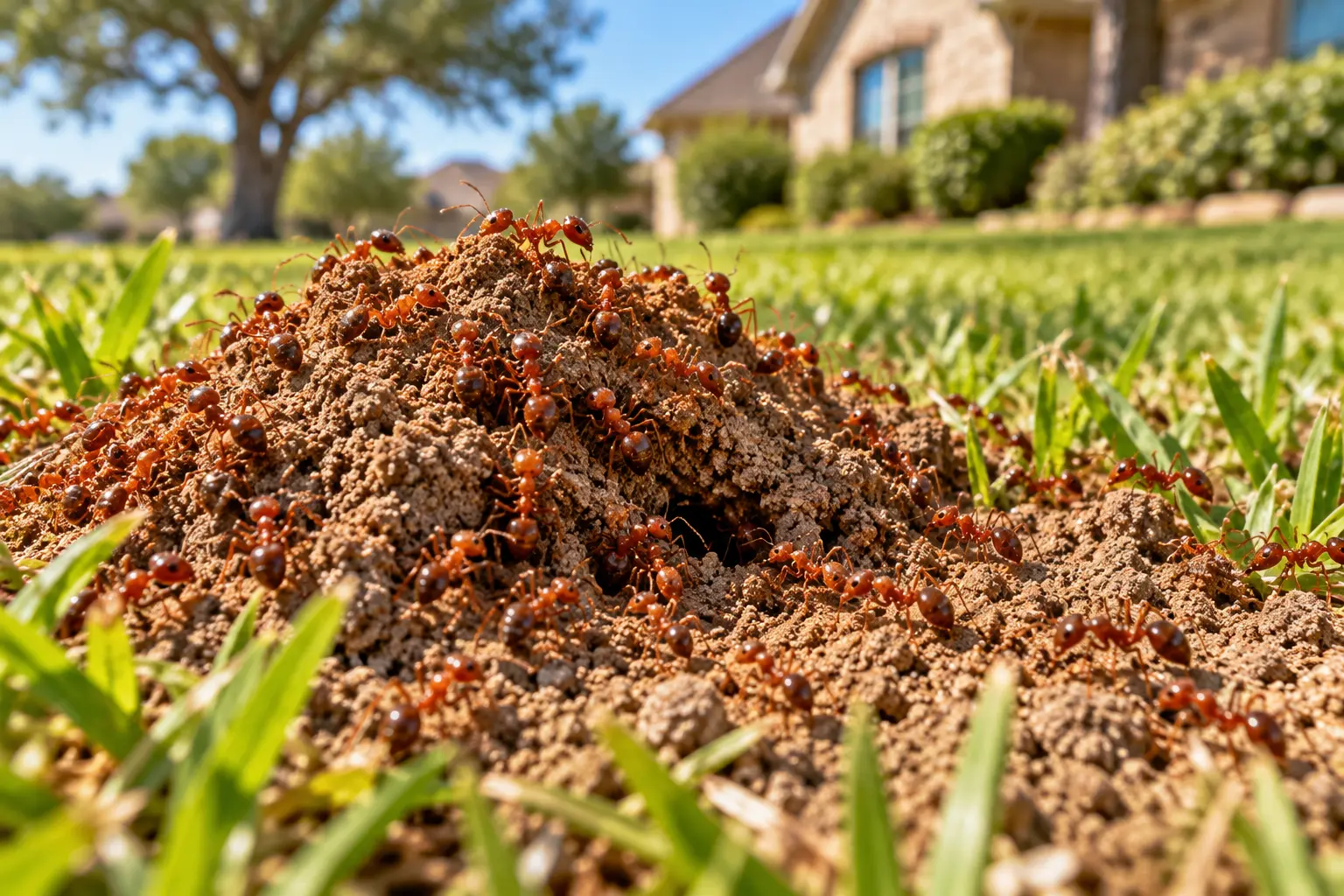
If you live in Keller, Southlake or anywhere in North Texas, you know the feeling: one day the yard looks fine, and the next it’s dotted with fresh dirt mounds. Fire ant season in North Texas runs most of the year, but timing your treatments right is the difference between a yard that stays clear and one that’s covered again in a few weeks.
When Is Fire Ant Season in North Texas?
Fire ants are active whenever the weather is mild, but activity peaks twice a year:
- Spring (roughly March to May): colonies wake up, start foraging and build new mounds.
- Fall (roughly September to November): another surge of activity as temperatures cool off from summer.
- Summer: in extreme heat, ants move deeper underground, then pop back up after rain or watering.
- Winter: activity slows down, but colonies don’t die off. They’re waiting for warmer days.
Spring and fall are the best times to treat, because ants are actively foraging and will carry treatment back to the colony.
Why Fire Ant Mounds Pop Up After Rain
A wave of new mounds after a storm usually isn’t a new infestation. Rain saturates the soil, so the colony moves up toward the surface and rebuilds. The soft, wet dirt makes those mounds appear almost overnight. The colony was already there; the rain just made it visible.
How to Identify Fire Ants
- Small, reddish-brown ants in mixed sizes, about 1/8 to 1/4 inch long
- Loose, fluffy dirt mounds with no opening in the center
- Mounds in sunny, open areas: lawns, flower beds, along sidewalks and driveways
- Ants that swarm up quickly and aggressively when a mound is disturbed
Not sure if it’s fire ants or another species? Our ant control page covers the most common ants in North Texas homes.
5 Proven Tips for Treating Fire Ants
1. Treat in spring and fall
These are the peak windows of fire ant season. Treating then knocks colonies back before they spread and keeps your yard clear through summer and winter.
2. Bait when the ants are foraging
Baits only work if the ants pick them up. Apply on a dry day with no rain in the forecast, when the ground isn’t soaked. In the heat of summer, late afternoon or evening works best.
3. Treat the whole yard, not just the mounds
The visible mounds are only part of the problem. A yard-wide approach (broadcast bait across the lawn, plus direct treatment of the mounds causing trouble) is the method recommended by Texas A&M AgriLife’s fire ant experts.
4. Skip the home remedies
Boiling water, gasoline, grits and kicking mounds apart don’t eliminate the colony. Many of them damage your lawn or are dangerous, and disturbing a mound usually just makes the colony move a few feet away.
5. Stay consistent
Fire ants move in from neighboring yards, empty lots and green spaces. One treatment helps, but ongoing protection is what keeps them from coming back each season.
Fire Ant Stings: Keeping Your Family Safe
Fire ant stings burn right away and usually form small white blisters within a day. Most stings can be handled at home by washing the area and avoiding scratching the blisters.
Some people have serious allergic reactions. Call 911 if someone has trouble breathing, swelling of the face or throat, dizziness or a widespread rash after being stung. Keep an eye on young children, and check your yard before letting pets out, since dogs often get stung on their paws and faces.
Why Fire Ants Keep Coming Back
- Store-bought sprays often kill the ants you see but miss the queen deep in the colony
- Colonies in neighboring yards keep moving in
- Treatments applied at the wrong time, like right before rain, wash away before ants take them
- Untreated colonies spread and start new mounds across the yard
How Stingray Handles Fire Ants
- Yard inspection: we find active mounds and the areas where colonies are spreading.
- Yard-wide treatment: protection across your lawn, not just the mounds you can see.
- Targeted mound treatment: fast relief for mounds near play areas, walkways and patios.
- Timed to the season: treatments scheduled around spring and fall peaks for the best results.
- Ongoing protection: quarterly service with free re-treats between visits if mounds come back.
We offer same-day or next-day service across all of our North Texas service areas.
Fire Ant FAQs
How long does fire ant treatment take to work?
Mound treatments work within hours to days. Yard-wide baits take longer, usually a few days to a few weeks, because the ants carry the bait back and it works through the whole colony, including the queen.
Is fire ant treatment safe for kids and pets?
Yes. We use targeted applications and will let you know how long to keep kids and pets off treated areas, usually just until they’re dry.
Can fire ants damage my home?
They can. Fire ants are drawn to electrical equipment and often nest in A/C units, outdoor outlets, pool pumps and utility boxes, which can cause shorts and expensive repairs.
Should I treat fire ants in the summer?
You can, but timing matters more in summer. Treat in the late afternoon or evening, when ants are out foraging, and avoid treating right before rain.
Fire Ants in Your Yard?
Let's Clear Them Out. Same-Day or Next-Day Service.
Stingray protects yards in Keller, Westlake, Trophy Club, Roanoke, Grapevine, Colleyville and Southlake with fire ant treatments timed to the season, safe for your family and pets, plus free re-treats between visits.
Let's
Connect
Our licensed and insured technicians are on call 24/7 for emergency pest control, with same-day and next-day service across Northeast Tarrant County.
Send us a message
24/7 Emergency Service