
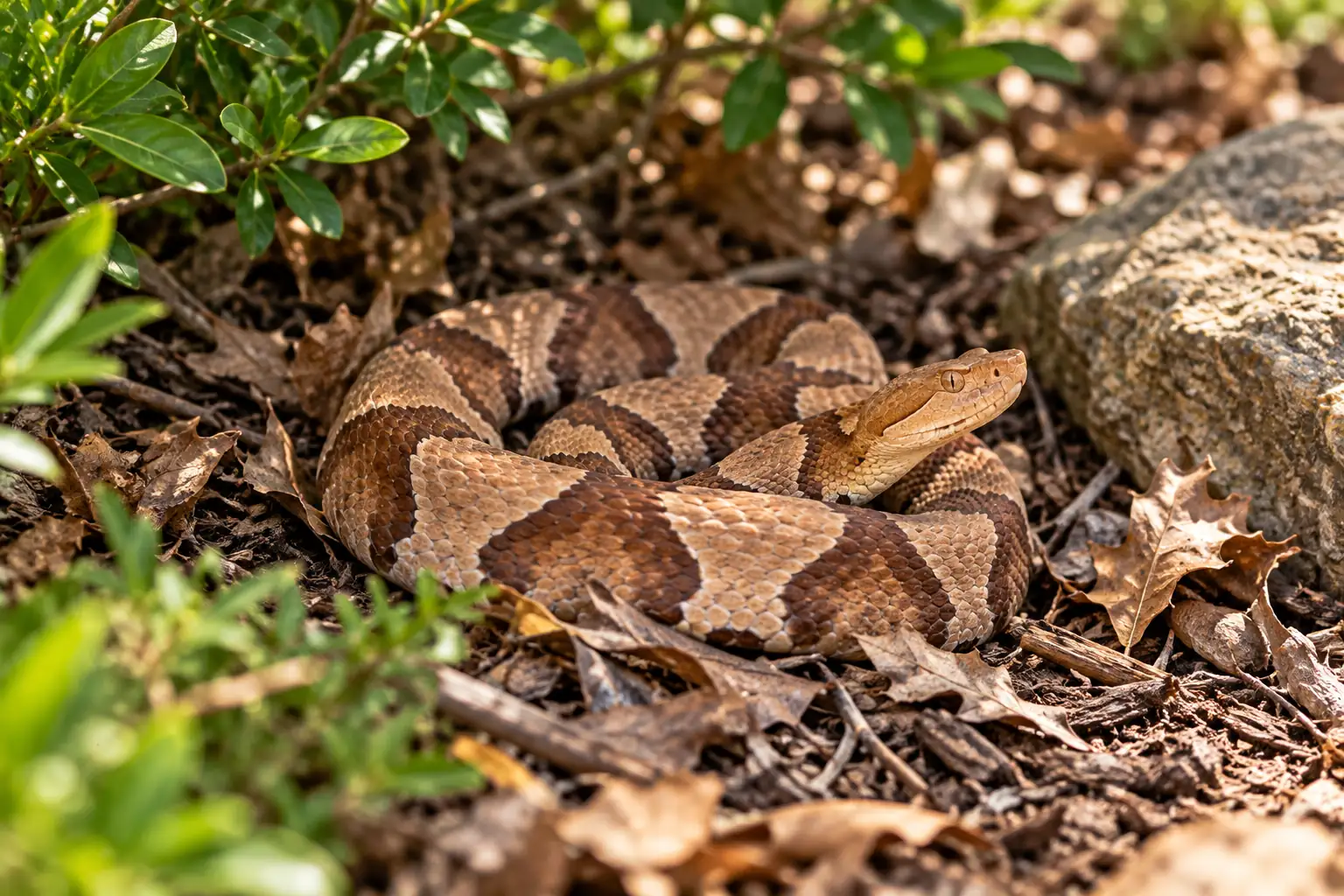
You’re pulling weeds in the flower bed in Keller or Colleyville, and there it is: a snake, coiled in the leaves. Is it dangerous, or just passing through? Copperhead snakes in North Texas are common, especially in wooded, leafy neighborhoods, but most snakes you’ll see around your home are harmless. Here’s how to tell the difference, and what to do either way.
Why Copperhead Snakes in North Texas Are So Common
Copperheads are the venomous snake DFW homeowners run into most. They thrive in suburban yards with leaf litter, mulch, rock borders, woodpiles and creek areas, and they follow their food: mice, rats, frogs and insects. They’re most active from spring through fall, often around dusk and on warm nights.
5 Ways to Tell a Copperhead Apart
1. Look for the hourglass bands
Copperheads have dark crossbands shaped like an hourglass, or a Hershey’s Kiss when viewed from the side: wide along the sides and narrow across the back. Many harmless snakes have blotches or spots instead.
2. Check the color
Copperheads are tan, pinkish or light brown with darker copper to chestnut bands, and a coppery head with no pattern on top.
3. Watch for a yellow tail tip on young snakes
Baby copperheads look like small adults but have a bright yellow or greenish tail tip, which they wiggle to lure prey.
4. Notice how it behaves
Copperheads often freeze and rely on camouflage instead of fleeing. That’s why most bites happen when someone steps on or reaches near one without seeing it.
5. Consider where you found it
Copperheads favor leaf litter, mulch beds, woodpiles, rock borders and wooded edges. Even so, location alone isn’t enough to identify a snake.
Common Harmless Look-Alikes
- Texas rat snake: long, gray to tan with dark blotches. A great climber, often found in trees, attics and garages, and excellent at controlling rodents.
- Water snakes: blotched or banded snakes near ponds and creeks, often mistaken for copperheads or cottonmouths.
- Brown snakes and earth snakes: small, plain brown snakes often found in flower beds. Completely harmless.
- Hognose snakes: thick-bodied snakes that flatten their necks, hiss and may play dead. They look dramatic but are harmless to people.
Snake ID Myths That Don’t Work
- “Triangle-shaped heads are venomous”: many harmless snakes flatten their heads when threatened.
- “Check the pupils”: it’s true copperheads have vertical pupils, but you’d have to get far too close to see them.
- “Baby snakes are less dangerous”: young copperheads are venomous from birth.
The safest rule: if you can’t identify it from a distance, leave it alone and keep kids and pets away.
What to Do If You See a Snake
- Stay calm and back away slowly. Give it at least several feet of space.
- Keep children and pets inside or well away from the area.
- Don’t try to catch, move or kill it. Many bites happen that way.
- Take a photo from a safe distance if you want help identifying it.
- If a snake is inside your home, close the door to that room and call for help.
What to Do If Someone Is Bitten
Copperhead bites are painful and need medical care right away, even though they’re rarely fatal. Call 911 or go to the nearest emergency room. While you get help:
- Stay calm and keep the person as still as possible
- Remove rings, watches and tight clothing near the bite before swelling starts
- Keep the bitten area still and at about heart level
- Don’t cut the wound, try to suck out venom, apply ice or use a tourniquet
Poison Control is available 24/7 at 1-800-222-1222. If your pet is bitten, call your vet or an emergency animal hospital immediately. You can learn more about Texas snakes from Texas Parks and Wildlife.
How to Make Your Yard Less Inviting to Snakes
- Keep leaf litter, brush piles and tall grass cleared, especially near the house
- Store firewood off the ground and away from the home
- Trim shrubs so you can see the ground underneath
- Seal gaps under doors, sheds, decks and foundations
- Control rodents. Fewer mice and rats means less reason for snakes to visit. Our fall rodent prevention guide covers how.
How Stingray Helps
- Yard and perimeter inspection: we spot the hiding places and food sources that attract snakes.
- Rodent control: removing the mice and rats snakes come looking for.
- Sealing entry points: closing gaps around your foundation, garage and doors.
- Help when you need it: if a snake gets into your home or garage, call us.
We offer same-day or next-day service across all of our North Texas service areas.
Snake FAQs
Are copperhead bites deadly?
Deaths are rare, but bites are painful, can cause serious swelling and tissue damage, and always need emergency medical care.
When are copperheads most active in North Texas?
Spring through fall. In the heat of summer, they’re most active in the evening and at night.
Should I kill a snake in my yard?
No. Trying to kill a snake is one of the most common ways people get bitten, and harmless snakes help control rodents. Keep your distance and call for help if it’s in a problem spot.
Do snake repellents work?
Most store-bought snake repellents aren’t reliable. Removing hiding spots and food sources is far more effective.
Snakes Around Your Home?
Let's Make Your Yard Less Inviting. Same-Day or Next-Day Service.
Stingray protects homes in Keller, Westlake, Trophy Club, Roanoke, Grapevine, Colleyville and Southlake by removing the rodents and hiding spots that attract snakes, with treatments that are safe for your family and pets.
Let's
Connect
Our licensed and insured technicians are on call 24/7 for emergency pest control, with same-day and next-day service across Northeast Tarrant County.
Send us a message
24/7 Emergency Service