
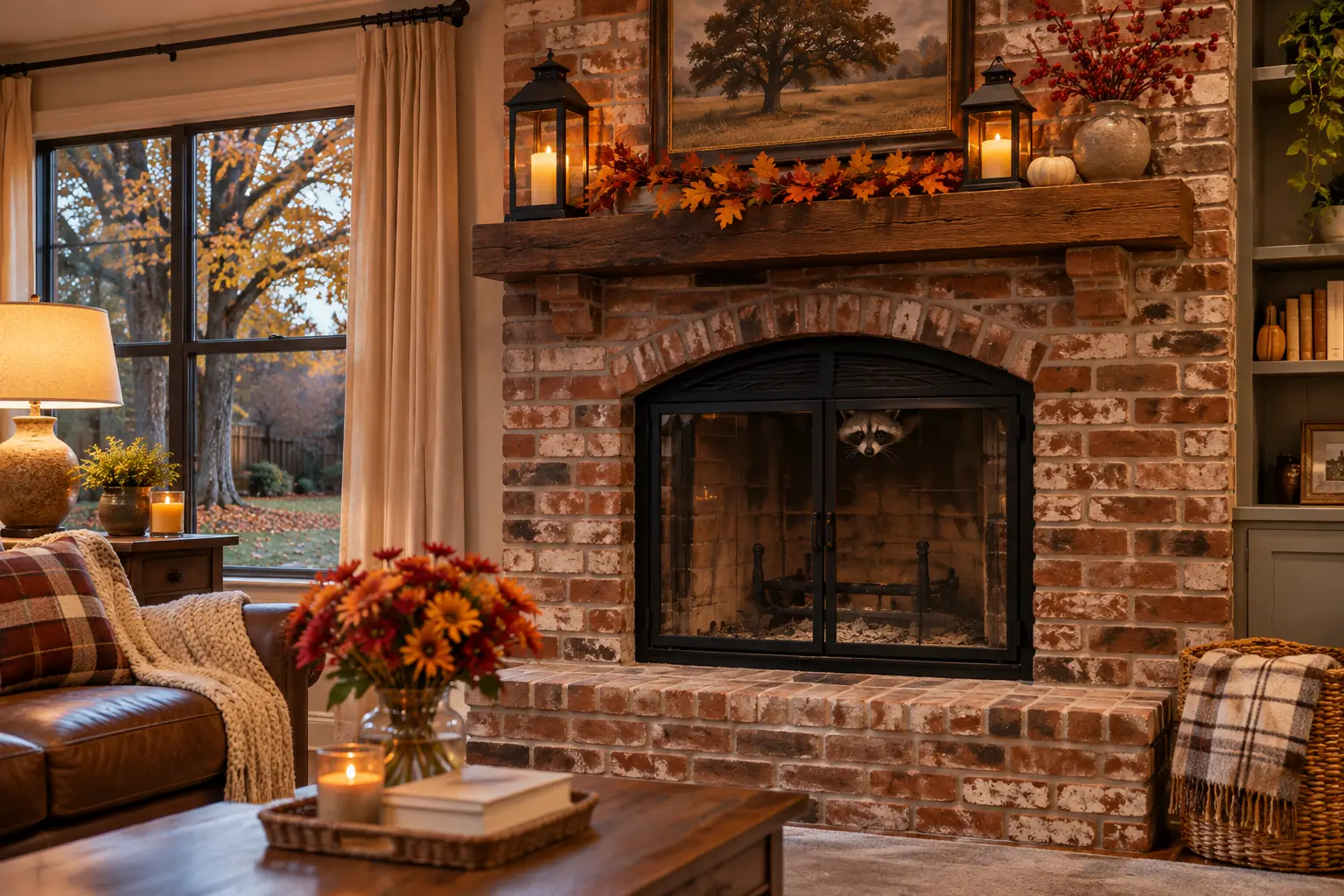
As soon as the first cold front rolls through North Texas, the calls start: scratching, thumping or chirping coming from the fireplace. Chimneys are warm, dark and sheltered, which makes them a perfect hideout for animals trying to ride out winter. If you hear an animal in your chimney in Keller, Southlake or Grapevine, here’s what it probably is, what not to do, and how to get it out safely before you light a fire.
Why Animals End Up in Chimneys in Late Fall
Once nights drop into the 40s, wildlife starts looking for a warm, protected place to den. An uncapped chimney is basically an open door on your roof, and an animal in the chimney is one of the most common wildlife calls we get this time of year. Some animals climb in on purpose to nest. Others, like squirrels and rats, fall in while exploring the roof and can’t climb back up the smooth flue.
That’s why late fall and early winter are prime time for chimney wildlife calls, right when most families are getting ready for their first fire of the season.
What’s Making That Noise? 4 Common Chimney Visitors
1. Squirrels
Scratching and scrambling during the day, especially in the morning and late afternoon. Squirrels often fall in and get stuck on the damper. If you’ve also heard noises overhead, read our guide on squirrels in the attic.
2. Raccoons
Heavier thumping, chattering or growling, mostly at night. Raccoons are strong climbers and will use the smoke shelf above the damper as a den. Mothers often raise their young in chimneys in late winter and spring.
3. Rats and mice
Light scratching, usually at night. Rodents in the chimney often mean they’re getting into the attic and walls too. Our fall rodent prevention guide covers the most common entry points.
4. Birds and bats
Fluttering, chirping or squeaking. Many birds, including chimney swifts, are federally protected, and bats are protected in Texas, so they need to be excluded the right way, not harmed.
What NOT to Do
- Don’t light a fire to smoke it out. It can trap or kill the animal (and any babies), and dry nesting material can start a chimney fire.
- Don’t open the damper or fireplace doors. A scared animal loose in your living room is a much bigger problem.
- Don’t try to grab it. Raccoons and bats can carry rabies. The CDC recommends never handling wild animals.
- Don’t use poison. An animal that dies in the chimney leads to odor and flies that can last for weeks.
What to Do If There’s an Animal in Your Chimney
- Keep the damper and fireplace doors closed
- Keep kids and pets out of the room
- Note when you hear it (daytime usually means squirrels or birds, nighttime usually means raccoons or rodents)
- Call a wildlife professional as soon as you can, before the animal gets hurt or makes it into the house
How to Keep Animals Out of Your Chimney
- Install a sturdy, screened chimney cap
- Trim tree branches back from the roofline
- Seal gaps around flashing, vents and soffits
- Get your chimney inspected before fireplace season
How Stingray Handles Chimney Wildlife
- Free inspection: we identify the animal and find out how it got in.
- Humane removal: safe removal of the animal, plus a check for babies.
- Entry point sealing: we seal the gaps so it doesn’t happen again.
- Clear next steps: we’ll tell you if you need a chimney cap or a chimney sweep before your next fire.
- Fast response: same-day emergency service when an animal is stuck.
If you think there’s an animal in your chimney, we offer same-day or next-day service across all of our North Texas service areas.
Chimney Wildlife FAQs
How do I know if an animal is stuck in my chimney?
Listen for scratching or fluttering from the fireplace, look for debris or droppings on the damper or in the firebox, and watch for a musty smell.
Will the animal leave on its own?
Sometimes. Animals that climbed in on purpose may leave at night, but animals that fell in usually can’t climb the smooth flue. Waiting too long can mean a dead animal and a bad smell.
Can I use my fireplace after an animal is removed?
Have the chimney checked first. Leftover nesting material is a fire hazard.
How much does chimney animal removal cost?
If there’s an animal in your chimney, the inspection is free. Removal pricing depends on the animal and how hard it is to reach, and we’ll give you a quote on site before any work starts.
Something Stuck in Your Chimney?
Get It Out Safely. Same-Day or Next-Day Service.
Stingray removes wildlife from chimneys, attics and walls in Keller, Southlake, Grapevine, Colleyville, North Richland Hills, Hurst and across DFW, with free inspections and humane removal.
Let's
Connect
Our licensed and insured technicians are on call 24/7 for emergency pest control, with same-day and next-day service across Northeast Tarrant County.
Send us a message
24/7 Emergency Service